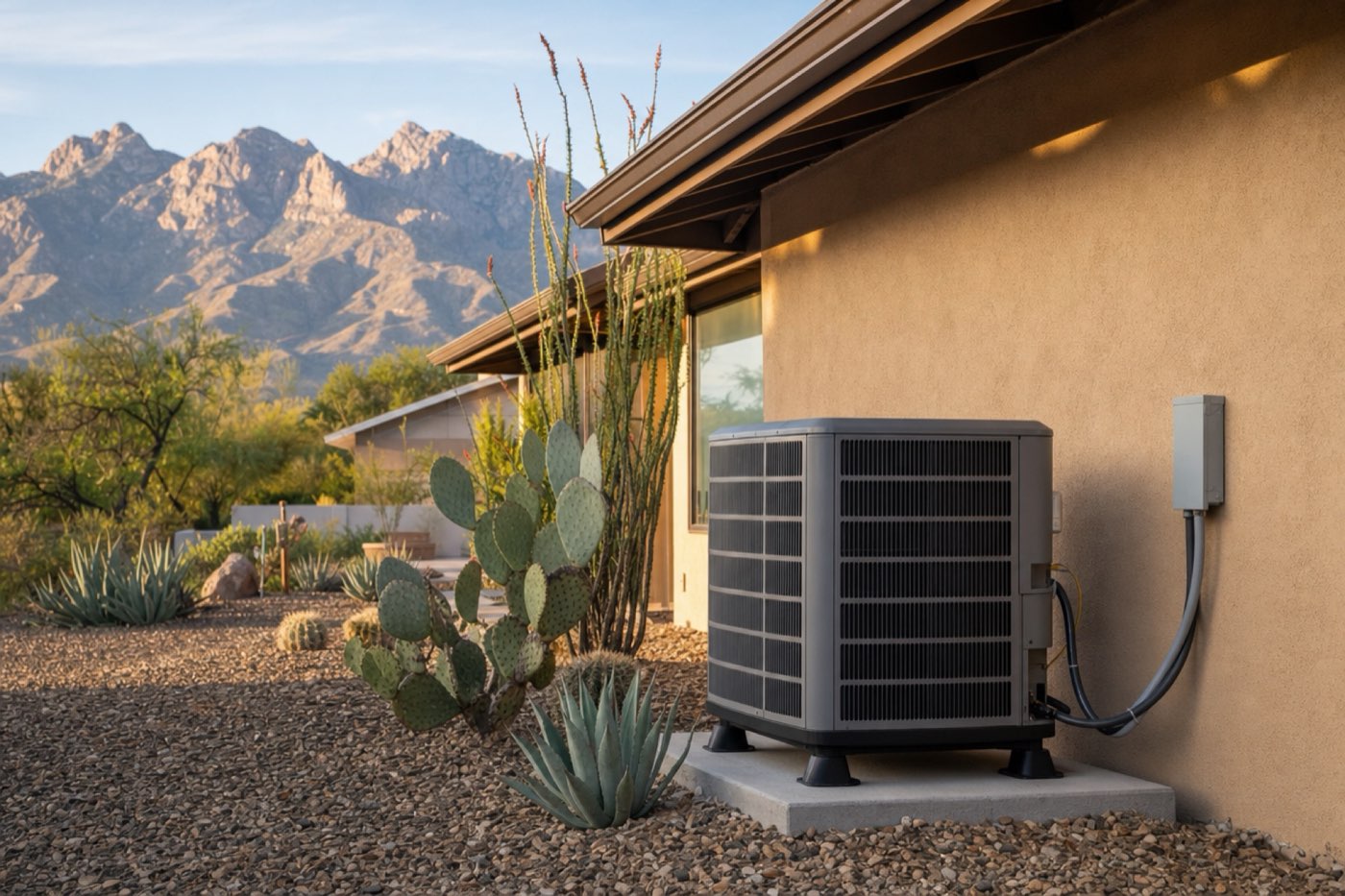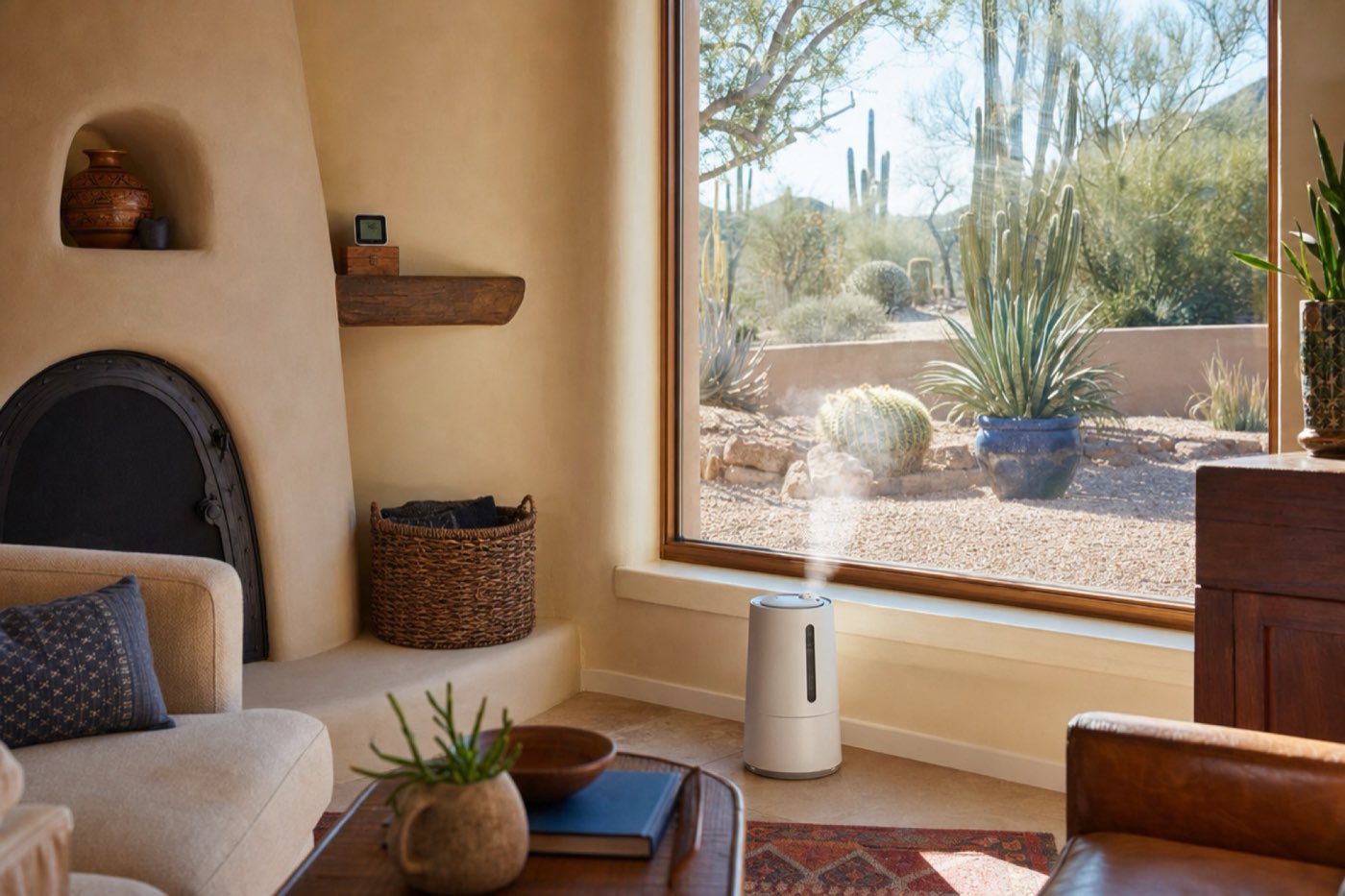
The best winter humidity level for your home is 30% to 50% relative humidity, the range the EPA recommends for homes. A reading of 30% is not too low, because it sits at the bottom of that range, but a reading under 30% means the air needs added moisture. If you are returning to your Tucson home in mid-October, put a gauge in the house before you buy or run any humidifier.
What is the best humidity level for a house in winter?
The EPA recommends keeping indoor relative humidity below 60%, ideally between 30% and 50%. That 30% to 50% band is your working target for the whole heating season.
ASHRAE, the heating and air conditioning engineering society, states that habitable spaces should be kept between 30% and 60%. It also identifies 30% to 60% at normal room temperatures as the range that gives the best conditions for people living in a space.
The overlap is simple. If you stay between 30% and 50%, you satisfy both sets of guidance.
Is 30% indoor humidity too low?
No. Thirty percent is the lower edge of the recommended range, so it is acceptable, but it leaves you no cushion. A small drop puts you under the line.
ASHRAE's handbook says that maintaining healthy humidity in cold seasons requires humidification when indoor relative humidity falls below 30%. That is your trigger point: below 30%, add moisture.
A practical goal is to land somewhere in the middle of the range, around 35% to 45%. That keeps you away from the low edge and well below the upper limits.
Why does heating the house make the air drier?
Cold air holds little moisture, and warming it does not add any. The same ASHRAE handbook explains that indoor relative humidity can fall well below 30% during cold seasons.
ASHRAE also states that cold outdoor air brought indoors and heated can produce indoor relative humidity of 20% or lower. That is well under the 30% line.
A house that has been closed up for the summer and is now heating on cool October and November mornings can land in this situation. You will not know where your own house stands until you measure it.
How do you measure indoor humidity?
Buy a humidity gauge. The EPA advises using a gauge to determine whether your indoor humidity is at a good level. It describes a humidity meter as a small, inexpensive instrument commonly available at hardware stores.
Use these steps in your first week back:
- Place a gauge in the room where you spend the most time, such as the living room or bedroom.
- Read it in the morning and again in the evening for several days, and write the numbers down.
- Place a second gauge in a different part of the house if you can, since rooms can read differently.
- Compare your readings with the 30% to 50% target.
Those readings tell you whether you need a humidifier at all. If the gauge stays at 30% or above, you may not need to add anything.
How do you add moisture without causing window condensation?
The EPA recommends a vaporizer or humidifier for increasing indoor humidity. The goal is to raise the reading into the range, not to push it as high as the unit will go.
- Start low. Run one humidifier in the room with the lowest reading and leave the rest of the house alone.
- Re-read the gauge. Check it after several hours and again the next day before changing anything.
- Stop at the target. Once the gauge reads 35% to 45%, hold it there instead of climbing toward 50%.
- Check cold surfaces daily. Look at window glass, window frames, and exterior walls each morning.
- Back off at the first sign of moisture. If you see fog or droplets, turn the humidifier down or off.
The condensation check matters because the EPA identifies moisture condensation on cold surfaces and mold or mildew growth as signs of inadequate ventilation or a humidity problem. Whether your windows fog depends on the indoor temperature, how cold the glass is, and how well the house is insulated and sealed. For that reason, the gauge reading and the window check work together, and no single humidifier setting fits every house.
What do different readings mean?
| Gauge reading | What it means | What to do |
|---|---|---|
| Below 30% | Under the recommended range; ASHRAE says to humidify | Add moisture in small steps |
| 30% to 50% | The EPA's ideal range | Keep it there |
| 51% to 59% | Under the EPA's 60% ceiling but above the ideal range | Watch windows and cold walls closely |
| 60% and above | Likely to cause condensation, which can lead to mold | Lower moisture and look for the source |
The 60% line comes from the EPA, which states that relative humidity above 60% is likely to cause building condensation, which can lead to mold growth. The agency also warns that high humidity increases the likelihood of mold.
Air humidity is not the only factor. Standing water, water-damaged materials, and wet surfaces also support mold, so a humidifier tank that is left sitting wet or a leak behind a wall counts as a moisture problem even when the gauge looks fine.
When should you call a licensed heating and air company?
Call if your gauge stays under 30% even after you run a humidifier, or if you see condensation on windows at readings inside the recommended range. Call also if your heating equipment is not running well as the first cold mornings arrive. A licensed company can look at your system, and if you rely on a heat pump, you can read about heat pump repair in Tucson before you schedule a visit. You can also see the Tucson-area neighborhoods we cover and how our referral process works.
As of October 2026, the 30% to 50% target and the 60% ceiling are the figures to use. Keep your gauge in place through the season, and recheck it whenever the weather turns noticeably colder.
If you want help with heating or air conditioning problems this fall, call (520) 303-1924 or send a service request. We are a free referral service that connects you with a licensed local heating and air company.