Test your heat during Halloween week, before Tucson's nights settle into the 40s. The National Weather Service lists the normal October low at 59.0°F and the normal November low at 47.9°F, so the nights when you will want warmth cluster around the turn of the month. Run the system once on a mild day, and check the filter, the vents, and your owner's manual first.
When should you turn on the heat in Tucson?
Turn it on for a short test run as October ends, then use it whenever your home feels cold. A calendar date cannot set the right moment for every house, because comfort depends on who lives there, how well the home is insulated, how much air leaks in, your thermostat settings, and your equipment type. It also depends on whether you live in a warmer or colder part of the Tucson area.
The monthly normals show why late October is the right time to test:
| Month | Normal high | Normal low | Normal mean |
|---|---|---|---|
| October | 86.3°F | 59.0°F | 72.6°F |
| November | 75.1°F | 47.9°F | 61.5°F |
Those are 1991 to 2020 normals from the National Weather Service. The drop in the normal low is 11.1°F in a single month, which is why a system that sat idle all summer should be proven before the first chilly morning rather than during it.
How cold can Tucson get this early?
Colder than the averages suggest, though a hard freeze this early is rare. The National Weather Service freeze date records list December 3 as Tucson's first freeze of 2025. The earliest first freeze on the list is October 16, 1899.
The Tucson record shows an October low of 26°F on October 30, 1971, according to the National Weather Service's monthly reviews. These are historical dates, not a forecast for the 2026 to 2027 season. They do show that Halloween week is a sensible deadline for having heat ready.
What should you check first before turning on the heat?
Work through this list in order. It takes a few minutes and uses guidance from the U.S. Department of Energy.
- Read the owner's manual. The Department of Energy's Consumer Guide to Home Heating and Cooling tells homeowners to consult the equipment owner's manual. It is the one document that matches your exact make and model.
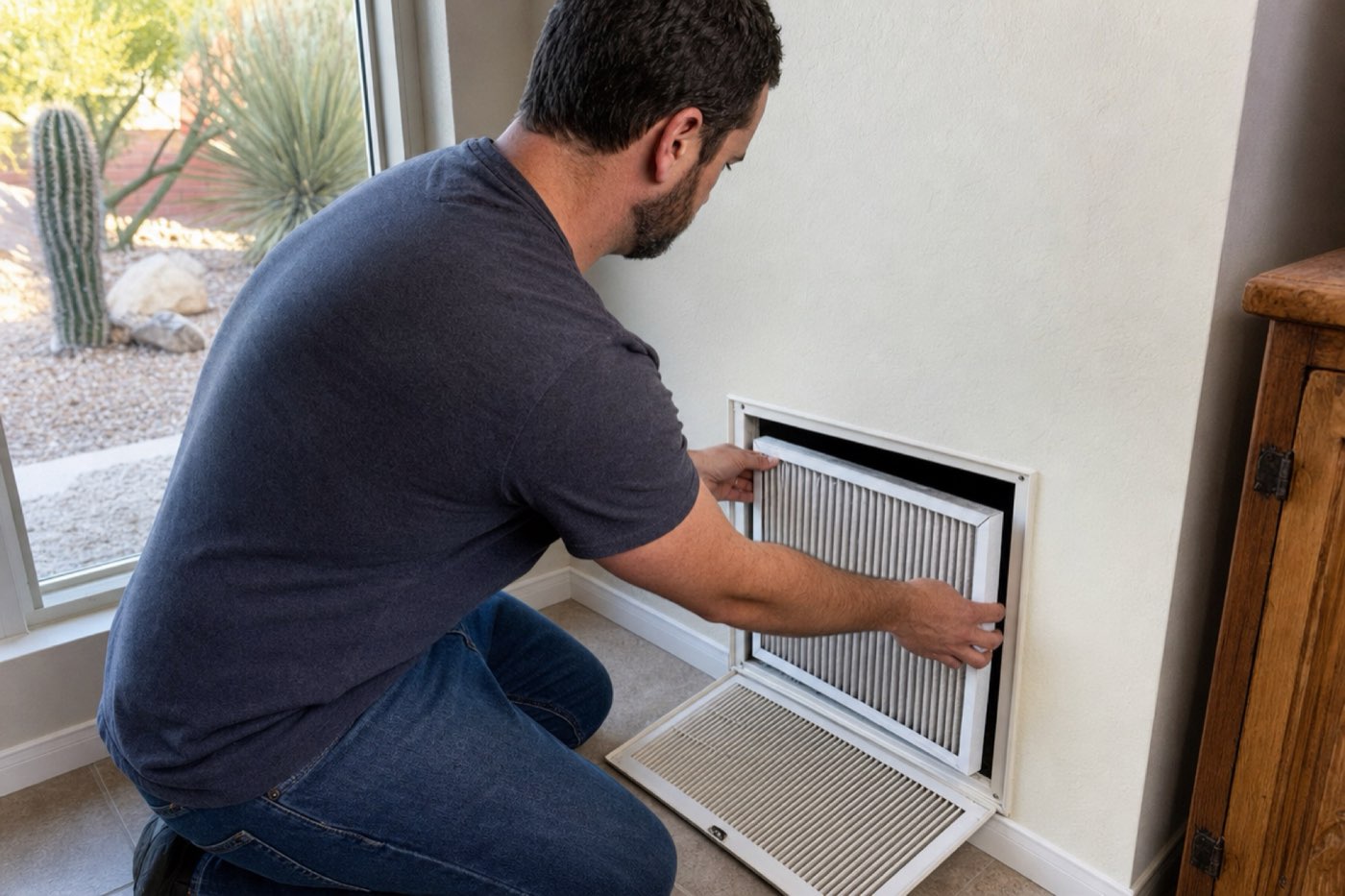
- Check the air filter. The same guide says clean or replaced filters can reduce heating and cooling bills and extend equipment life. Filter size and replacement timing vary by system, so use your manual or the size printed on the old filter.
- Clear every vent and register. The Department of Energy's HVAC guide for homeowners says vents and registers should not be blocked by furniture, carpets, or other items that restrict airflow. Summer rearranging often leaves a couch or rug in the way.
- Look at the drain pan. That guide recommends confirming the condensate drain pan is draining. Standing water in the pan is a sign to call for service.
- Leave coils, fan, and motor oiling to the manual. The guide recommends cleaning coils and the fan, and oiling the fan motor only when the manufacturer's instructions specify it. If your manual does not call for oil, do not add any.
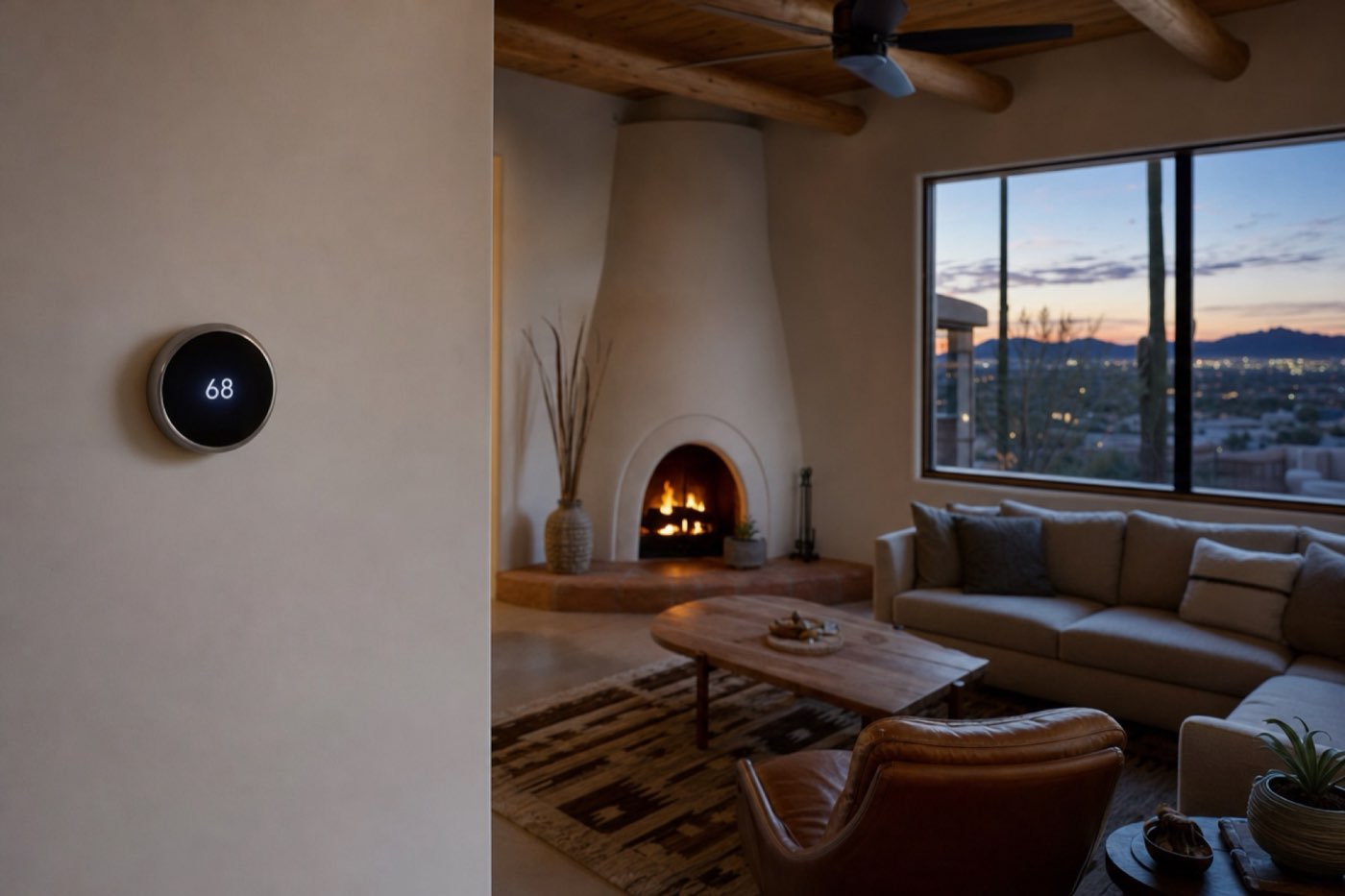
- Run a test cycle. Set the thermostat to heat and a few degrees above room temperature. Confirm warm air reaches the rooms and the system shuts off normally.
Which heating checks should a licensed company handle?
Anything involving combustion gases belongs to a professional. The Department of Energy recommends testing for flue-gas spillage and correcting it, and a homeowner does not have a safe do-it-yourself way to run that test. If you have a gas furnace, treat it as a service task.
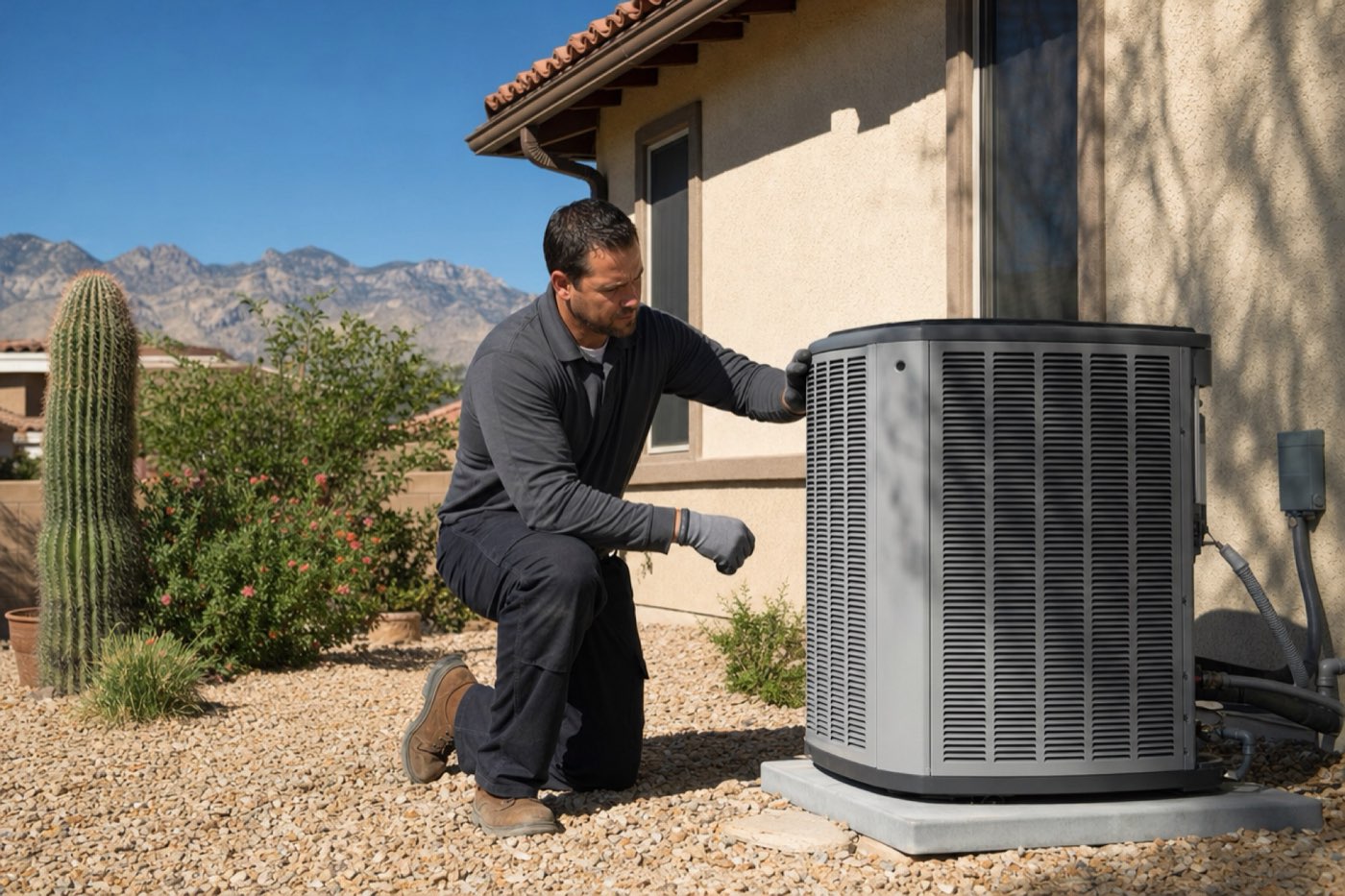
The Department of Energy also recommends professional maintenance of a furnace or heat pump each year, and its home heating guide says furnaces should be checked in the fall. Booking that visit in October fits the schedule. You can read about what an AC tune-up visit covers, since many Tucson companies pair heating and cooling checks.
What if your home heats with a heat pump?
The same fall check applies. The Department of Energy lists heat pumps alongside furnaces in its annual professional maintenance recommendation, and the filter, vent, and drain pan checks above all apply.
If the heat pump runs but the house stays cool, or it will not start at all, that is a repair call. Read about heat pump repair in Tucson to see what to expect before you request a visit.
What if the heat does not work on your test run?
You have time. With the normal November low at 47.9°F, a test in the last week of October leaves a margin to get a licensed company out before nights get cold. Waiting for the first cold morning to find a problem leaves you in the cold while you search.
Write down what you saw, such as no warm air, odd noises, or water near the unit, so you can describe it clearly. Companies in our Tucson service area can take it from there.
Quick plan for Halloween week
- Find your owner's manual and note the filter size.
- Replace or clean the filter.
- Move furniture and rugs off vents and registers.
- Run the heat for one full cycle on a mild afternoon.
- Schedule the annual professional check if you have not had one this fall.
Call (520) 303-1924 or send a service request and we will connect you with a licensed local heating and air company. Tucson Air Conditioning Repair is a free referral service, not a contractor.