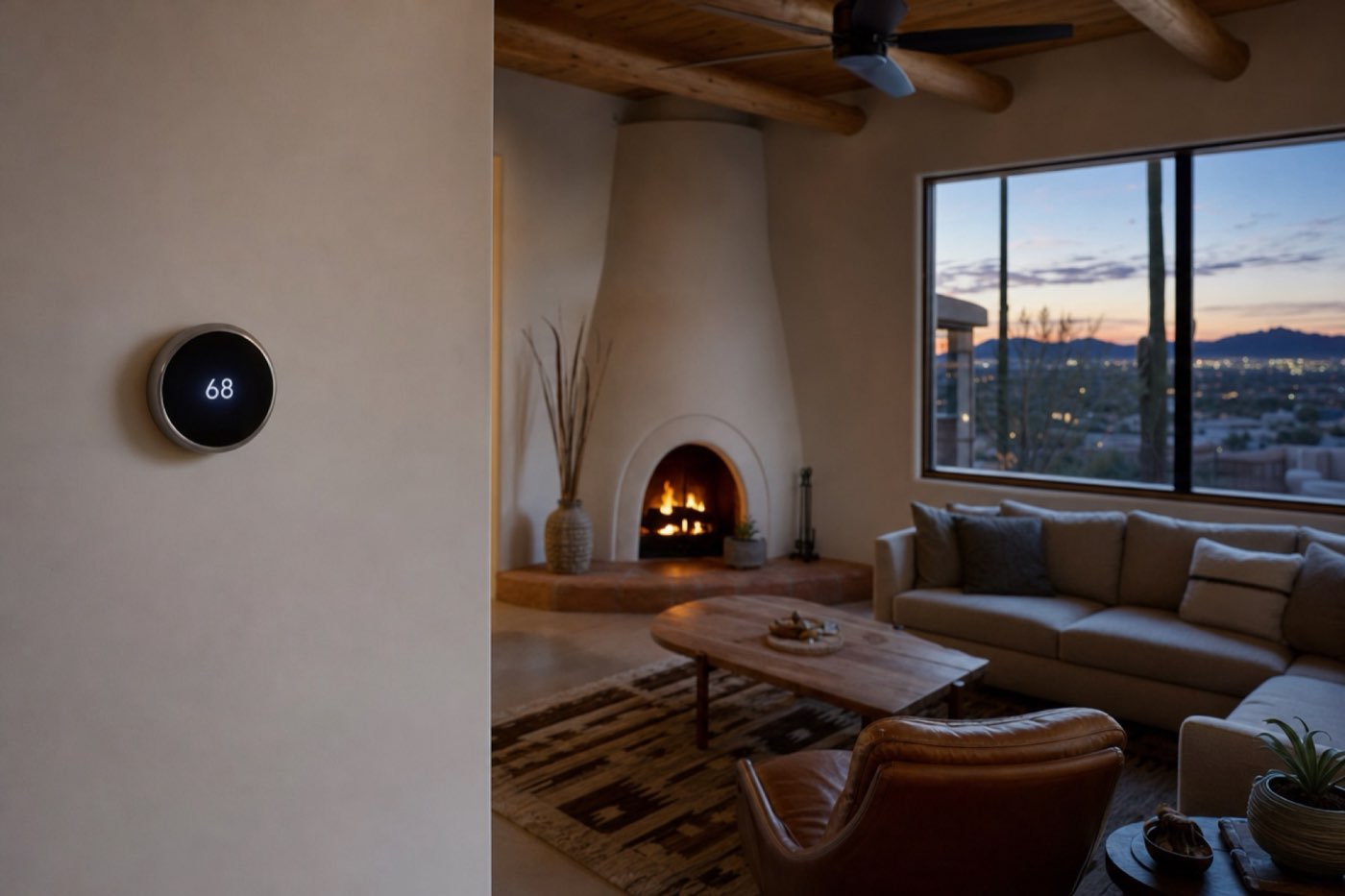
Set your thermostat to 68°F this winter, the temperature the U.S. Department of Energy recommends, according to Tucson Electric Power's residential energy saving tips. Yes, 72°F is higher than that recommendation, and Tucson Electric Power (TEP) advises using the lowest comfortable temperature to keep heating costs down. When you are asleep or away, lower the setting 10 to 15 degrees for eight hours.
What is the best winter thermostat setting in Tucson?
The target is 68°F while you are home and awake. TEP's Tucson guidance pairs that 68°F winter number with 78°F in summer, so the same logic of "as lean as you can comfortably go" applies year-round.
TEP's wording is worth following literally: choose the lowest temperature that still feels comfortable to you. That is a personal number, so treat 68°F as the starting point and adjust from there.
| Time of day | Suggested setting |
|---|---|
| Home and awake | 68°F |
| Asleep or away (8 hours) | 10 to 15 degrees lower, or about 53°F to 58°F |
Is 72 degrees too high for winter?
For most households, 72°F is a comfort setting rather than a savings setting. It sits 4 degrees above the 68°F recommendation, and every degree you hold above that target means the heating system runs more.
Some homes have a good reason to stay warmer. TEP notes that individual preferences may call for a higher setting, including in homes with infants or with elderly or ill occupants.
If you currently sit at 72°F and have no health reason to, try 70°F for a week, then 69°F, then 68°F. Add a sweater or a blanket before you add a degree.
How much does a nighttime or away setback save?
TEP says the Department of Energy recommends lowering the thermostat by 10 to 15 degrees for eight hours while you sleep or are out. TEP also states that a setback lasting more than eight hours can save up to about 1% in annual heating costs for each degree of setback.
That makes the setback the biggest lever you control. A 10-degree drop from 68°F lands at 58°F, and a 15-degree drop lands at 53°F.
Your real savings depend on several things:
- Outdoor temperature on a given night
- The efficiency of your heating system
- Insulation in your walls and attic
- Where the thermostat is mounted
- Who is home and when
- Your utility rate and how long the setback lasts
Tucson nights that fall into the 40s in early November give a setback more time to work than a mild afternoon does.
Should I use a smart thermostat for winter savings?
A smart thermostat makes the schedule automatic. TEP says smart thermostats can learn your temperature preferences and adjust to a schedule on their own, and they can be programmed manually or controlled remotely from an internet-connected device.
The savings are measurable. According to TEP's smart thermostat rebate page, smart thermostats save homeowners an average of 10% to 12% on heating bills and 15% on cooling bills.
TEP offers a $35 rebate for purchasing and installing a qualified smart thermostat. The thermostat must be ENERGY STAR certified, per the Efficient Home Program application form. Eligibility rules and the list of qualified models can change, so confirm them before you buy, as of November 2026. You can also look over the TEP rebates available to Tucson homeowners.
What should heat pump owners know before using a big setback?
The 10 to 15 degree setback is TEP's general guidance for the thermostat. If your home heats with a heat pump, check your equipment manufacturer's documentation for how deep a setback it is designed for, or ask a licensed heating contractor.
If your heating seems to run constantly, or the house will not warm up in the morning, that is a sign to have the system looked at. A licensed contractor can assist with heat pump repair in Tucson, and an AC tune-up before the cold nights arrive is a sensible time to ask about your thermostat settings too.
Do the same rules apply to summer settings?
The principle is the same: higher in summer, lower in winter. TEP says raising the summer thermostat by each degree can reduce cooling energy use by about 10%, according to its nine steps to get ready for summer.
TEP recommends precooling before peak hours and raising the thermostat during them. Its pre-cooling guidance lists summer on-peak hours as 3 p.m. to 7 p.m. on weekdays from May through September for applicable customers.
A simple plan for this heating season
- Set the awake, at-home temperature to 68°F, or the lowest setting that feels comfortable.
- Set an eight-hour overnight or away setback 10 to 15 degrees lower, if your equipment supports it.
- Keep a warmer setting if infants or elderly or ill family members live in the home.
- Consider an ENERGY STAR certified smart thermostat and the $35 TEP rebate to automate the schedule.
If you want help choosing settings or checking your system before cold weather, call (520) 303-1924 or send a service request. We are a free referral service that connects you with a licensed local heating and air conditioning company.