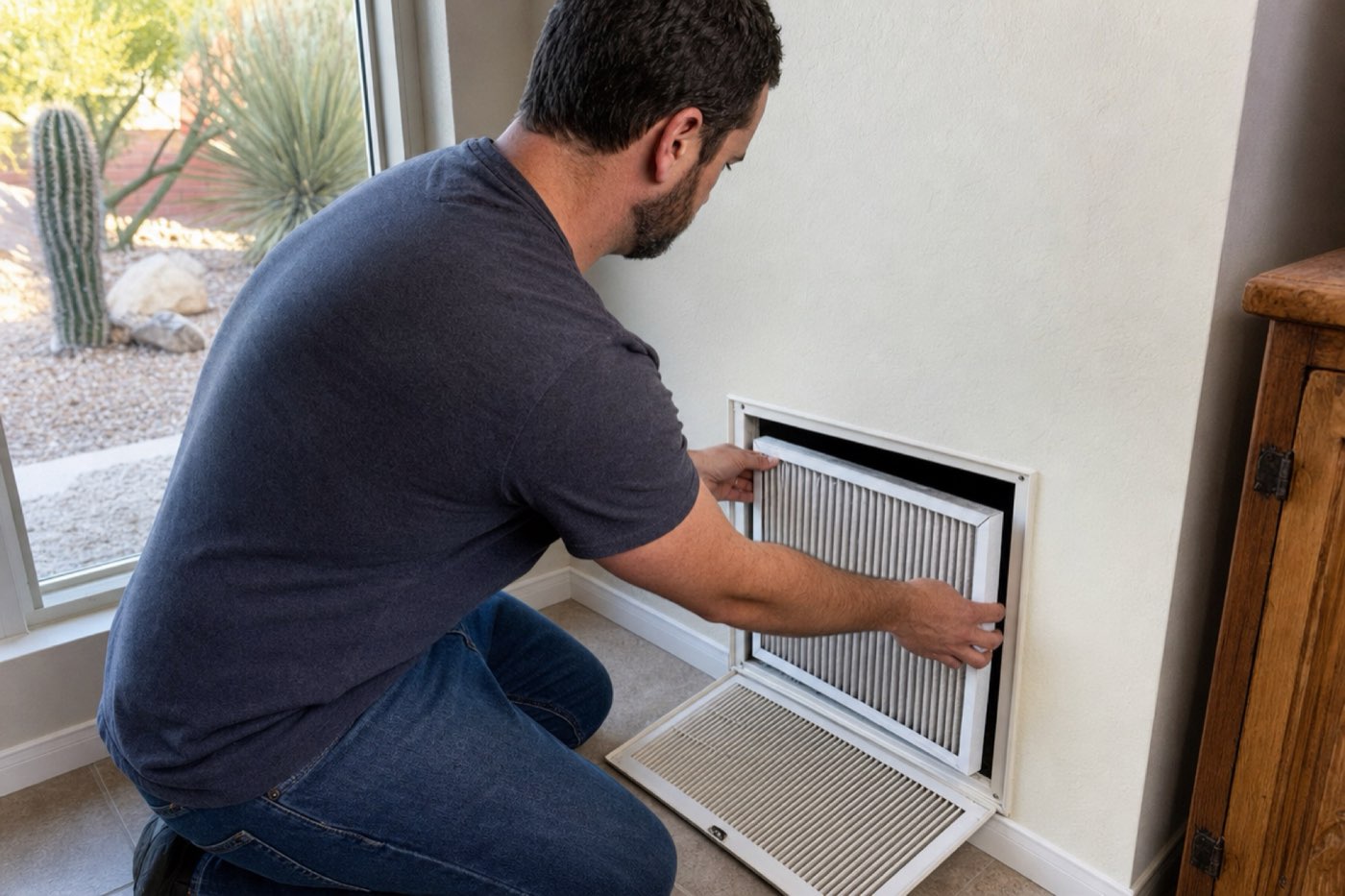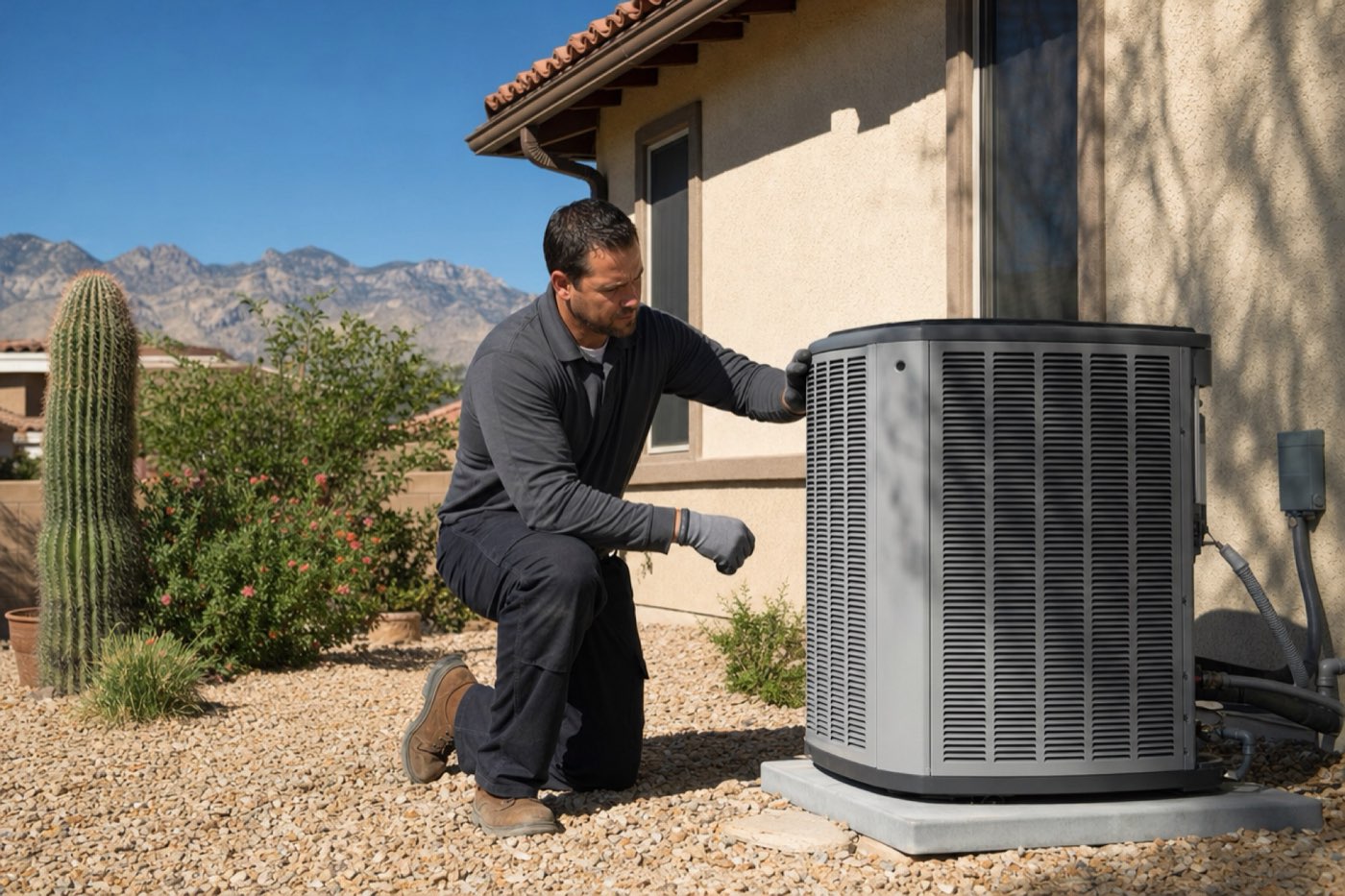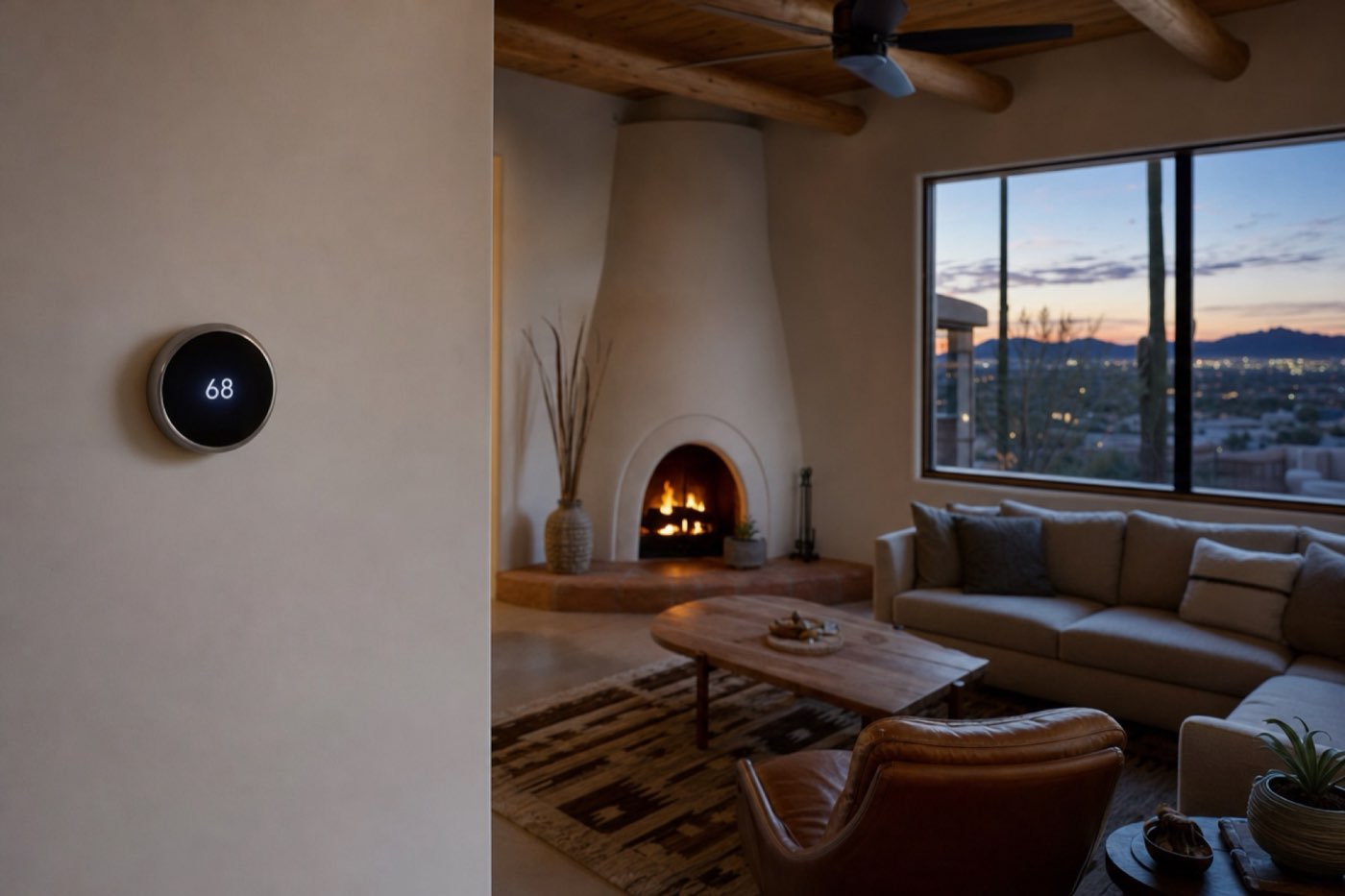
Yes, indoor relative humidity drops when the heater runs, because heating air without adding water lowers its relative humidity. The U.S. Environmental Protection Agency recommends keeping indoor humidity between 30% and 50%. In Tucson, you will notice the change most in mid-October, when monsoon moisture fades and heat pumps start running again.
Why does heating air lower its relative humidity?
Relative humidity compares the water vapor in the air to the most vapor the air can hold at its current temperature. Warm air can hold more vapor than cool air.
When your heat pump warms cool outdoor air that has come indoors, the amount of water in that air stays the same. The air's capacity goes up, so the relative humidity number goes down.
The exact drop depends on four things: outdoor temperature, outdoor relative humidity, indoor temperature, and air pressure. Two homes with the same thermostat setting can land at different humidity readings.
What is the ideal home humidity level in winter?
The ideal winter range is 30% to 50% relative humidity. The EPA's Care for Your Air guide gives this range, and its biological contaminants guidance adds that indoor humidity should stay below 60% to reduce conditions that support mold, dust mites, and similar problems.
| Indoor relative humidity | What it means |
|---|---|
| Below 30% | Under the EPA range. Dry skin, dry eyes, and static electricity become more likely. |
| 30% to 50% | The EPA's recommended range for health and comfort. |
| 50% to 60% | Above the ideal range but under the 60% ceiling. Watch for any upward trend. |
| Above 60% | Higher likelihood of mold and other biological contaminants. |
The EPA says a home humidity gauge can tell you whether your level is appropriate. A basic gauge placed in your main living area is the simplest way to check.
What does ASHRAE Standard 55 say about winter humidity?
ASHRAE Standard 55 judges thermal comfort by combining humidity with temperature, air speed, clothing, and activity. The 30% to 50% target is EPA residential guidance, not an ASHRAE requirement.
Standard 55 sets no minimum relative humidity for thermal comfort, according to Addendum d to the 2017 edition. The same document names drying of skin and mucous membranes, dry eyes, and static electricity as nonthermal factors that can limit acceptance of very low humidity.
ASHRAE's technical FAQs make the same point: very low humidity can be unacceptable even without a thermal comfort minimum. A room can feel the right temperature and still be uncomfortable because it is too dry.
How does Tucson's shift from monsoon to dry season affect your home?
Your house spends the summer with monsoon moisture in the outdoor air. When that moisture leaves in the fall, the outdoor air that leaks in and the air your system draws in carry less water.
Once the heat pump starts warming that drier air, indoor relative humidity can fall below 30%. Your skin, eyes, and nose are usually the first to tell you.
The EPA notes that indoor humidity also affects concentrations of some indoor air pollutants. Comfort is not the only reason to watch the number.
What should returning snowbirds do in October?
If you are coming back to a Tucson home that was closed up for months, follow these steps in your first week:
- Place a humidity gauge in your main living area before you turn on the heat.
- Run the heat pump through its first full heating cycle and confirm it produces warm air.
- Read the gauge again after 24 hours of normal use.
- If the reading is above 60%, look for musty odors or visible mold. The EPA says high humidity increases the likelihood of mold.
- If the reading is below 30%, you are under the EPA range and can consider your options for adding moisture.
If the heat pump does not heat properly on its first run, heat pump repair in Tucson is the next step. A seasonal AC and heat pump tune-up before the cold weeks is also worth scheduling.
Pay closer attention if anyone in your household is an older adult, a child, or has asthma, heart disease, or another health condition. The EPA, in Improving Your Indoor Environment, identifies these groups as potentially more vulnerable to indoor air quality effects. The EPA also says mold, dust mites, pollen, pet allergens, and pests can trigger asthma symptoms and allergic reactions.
Should you add a humidifier?
Add moisture only if your gauge reads below 30% and the dryness bothers you. Aim for the 30% to 50% range, not higher.
Humidifiers need care. The EPA's The Inside Story recognizes that humidifiers can become sources of biological contamination if they are not properly controlled. Keep an eye on the gauge so you do not overshoot past 50% to 60%.
A whole-house unit has to match your specific equipment and house, so a licensed contractor should evaluate it. You can learn how the referral process works before you request a visit.
Frequently asked questions
The answers below are in the FAQ section that follows.
If your home feels dry this fall or your heat pump needs a first-of-season check, call (520) 303-1924 or send a service request. This free referral service connects you with a licensed local heating and air company.